China Did Not Hide. The World Chose Not to Look.
China Never Really Hid. Others Simply Misread the Signals.
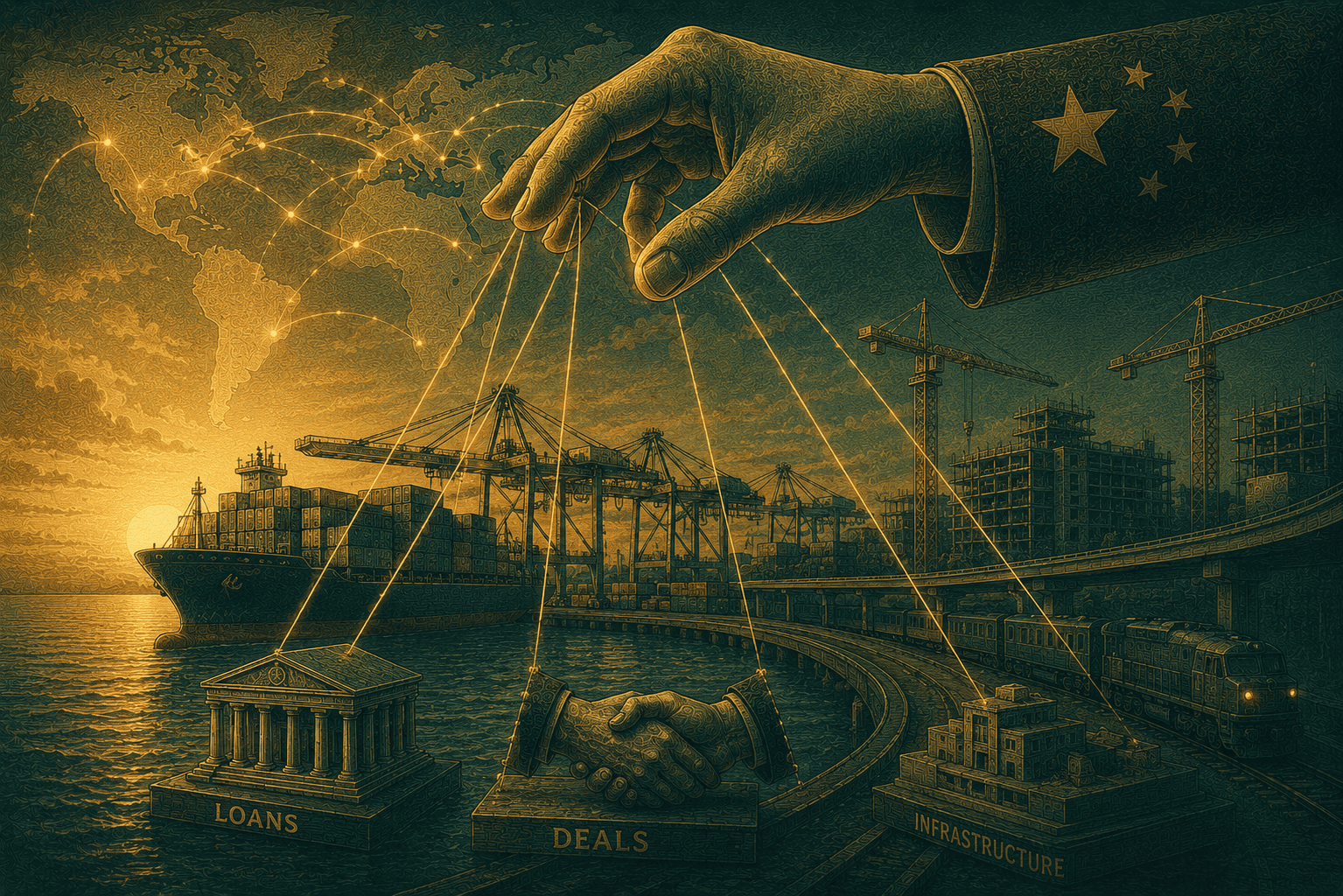
For thirty years, ports replaced speeches, loans replaced threats, and the countries watching called it development. They were right. That was also the problem.
There is a grainy clip from 1992 that almost no one watched when it aired.
An elderly man on a train through southern China, looking out the window, speaking in short sentences to the people around him.
No stadium. No flags. No performance of power.
Easy to scroll past, if scrolling had existed then.
Thirty years later, the clip carries weight it did not have when it was made.
Not because of what was said in it.
Because of what followed it and stayed quiet for so long.
The Phrase That Gets Quoted
The phrase that gets quoted is: hide your strength, bide your time.
It circulates in foreign policy discussions as if someone found the original blueprint. A confession. An admission of concealment.
That reading misses something.
The phrase describes tempo, not deception.
Who sets the early rhythm? Who waits to shift the beat.
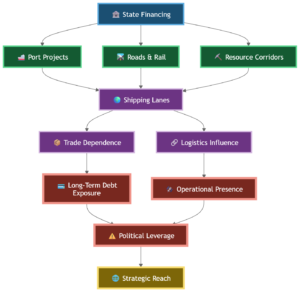
A country that spends twenty years building export capacity, foreign exchange reserves, and port infrastructure is not hiding. It is sequencing.
The difference matters because hiding implies a threat held back.
Sequencing implies a capability being built — and the building is the strategy, not the pause before the strategy.
The 1990s factories were not placeholders.
The engineers sent abroad were not tourists on scholarship.
The infrastructure projects signed quietly across Southeast Asia and sub-Saharan Africa were not goodwill gestures dressed up as development.
Each piece, taken individually, looked ordinary.
Governments sign port deals. Countries send students abroad. Factories move to wherever labor is cheaper.
That is the texture of normal global commerce.
The aggregate was something else.
And the aggregate was visible to anyone who added the numbers rather than reading each line separately.
WTO Accession
When the WTO accession happened in 2001, the dominant interpretation in Western capitals was: now they play by our rules.
That reading was not wrong.
It was incomplete in a way that would take twenty years to fully surface.
The accession negotiations were long and procedural.
Terms were accepted. Commitments were signed. Documents were exchanged.
It looked like integration into an existing order.
And it was.
It was also, simultaneously, access to the operating logic of the global trading system at close range, from inside, with two decades to study it before any serious challenge would be credible.
The door was not forced.
Western governments and corporations lobbied actively for China’s entry because cheap manufacturing served their quarterly reports, and Chinese markets served their growth projections.
The classroom was opened willingly.
The keys were handed across.
The student arrived, enrolled, and spent the next fifteen years learning the grading system before attempting to change it.

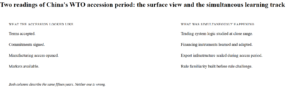
A trade analyst put it plainly in a 2014 report that received far less attention than its conclusions warranted: the integration was real, the learning was also real, and the two were not contradictory.
The countries that benefited most from the arrangement were also the ones least motivated to examine where it was going.
That is not cynicism.
That is how large financial arrangements shape the information people pay attention to.
The people most positioned to flag the trajectory were the people most profitably invested in the current one.
The Pattern Was Visible
Scroll through international news from the 2000s with the benefit of what is now visible and the texture is consistent in a way that was not visible at the time.
A Chinese company acquires a European industrial firm.
A port agreement is signed on the East African coast.
A road project begins in a country with significant mineral reserves and limited alternative financing.
Infrastructure loans go to governments that would not qualify for World Bank terms.
Shipping lanes gain new depth.
Logistics corridors extend.
No doctrine announced with any of it.
No speeches claiming a new world order.
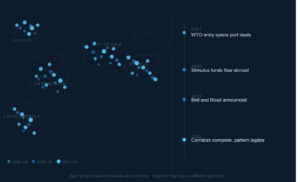
Just accumulation, the way compound interest accumulates — invisible in any single period, legible only when someone adds the totals.
A port by itself is a port.
Twelve ports across three continents, connected by financing terms that create long repayment obligations and operational arrangements that outlast the individual governments that signed them — that is a different asset.
The distinction between the two is not visible until someone draws the map with all twelve dots.
Those maps existed.
The think tank reports existed.
The analysts who flagged the trajectory were publishing.
The question of why the flags did not change policy earlier has a straightforward answer: the people in the best institutional position to act were simultaneously receiving the most direct financial benefit from the arrangement continuing.
Visibility was not the constraint.
Incentive was.
The Shift After 2013
Sit in a policy meeting in 2023 where someone describes recent Chinese foreign policy as aggressive, and something nags at you.
Not because the observation is wrong.
Because it implies a prior state of non-aggression that was always more comfortable than accurate.
The ports were there in 2005.
The loans were there in 2008.
The infrastructure and the commercial leverage and the shipping lane positioning were being built continuously, logged in trade data, visible in investment maps.
What made the pre-2013 period feel non-aggressive was not the absence of strategic activity.
It was the absence of a public strategic language to accompany it.
The shift after 2013 is real, but it is a shift in communication, not only a shift in policy.
Belt and Road gave the infrastructure a name and a doctrine.
Island construction in the South China Sea gave the territorial claims a physical presence that satellite photographs made undeniable.
The explicit framing of “East rising, West declining” gave domestic and international audiences a vocabulary that matched what had been accumulating for thirty years.
That shift matters.
A strategy of deliberate quietness, when it ends, leaves no reliable baseline for reading what comes next.
When every previous move was conducted below the threshold of formal declaration, every subsequent declared move becomes harder to interpret.
Is this escalation, or is this the same strategy now choosing to speak?
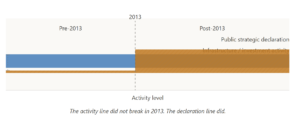
The honest answer is: both are partially true, and the two interpretations lead to different policy conclusions, which is part of why the analytical debate has produced less clarity than the data might suggest.
Framework Failure
There is something specific about the disorientation of watching a long-quiet strategy become explicit.
The countries that were most attentive to the early accumulation were generally not the major Western economies.
They were smaller states in the direct geography of the projects — governments that could not afford to mistake a port deal for pure development assistance because they were the ones living inside the repayment terms.
The major analytical frameworks — convergence theory, democratic peace theory, economic interdependence as a conflict reducer — were built in a post-Cold War period when the data seemed to support them.
They were not wrong as descriptions of what the data showed at the time.
They were insufficient for a situation where a major player was operating across a thirty-year timeline rather than a quarterly one, and where the visible data in any given year did not contradict the frameworks even as the aggregate was building toward a different outcome.
This is the specific failure mode of frameworks that are adequate for the data they were built on: they remain plausible past the point where they are useful.
Each additional year of not-quite-wrong data makes them harder to abandon, even as the compound picture quietly assembles something the framework was never built to see.

The Map Explains It
A map of Chinese overseas investment and infrastructure from 2005 compared with 2025 tells the story without annotation.
The dots appear slowly at first.
Scattered.
Individual enough to be read as a normal commercial activity.
Then they cluster.
Then the clusters reveal a coherence that was not apparent in any individual project — shipping corridors, resource channels, refinancing dependencies, operational agreements that outlast the governments that signed them.
No explosion on the map.
No single year where everything changed.
Just saturation, reached by steady accumulation, now simply present.
The first strategy is legible in hindsight, written across thirty years of trade data and quietly signed agreements and reserve accumulation figures that were public every quarter.
The second strategy is different in that it has been stated.
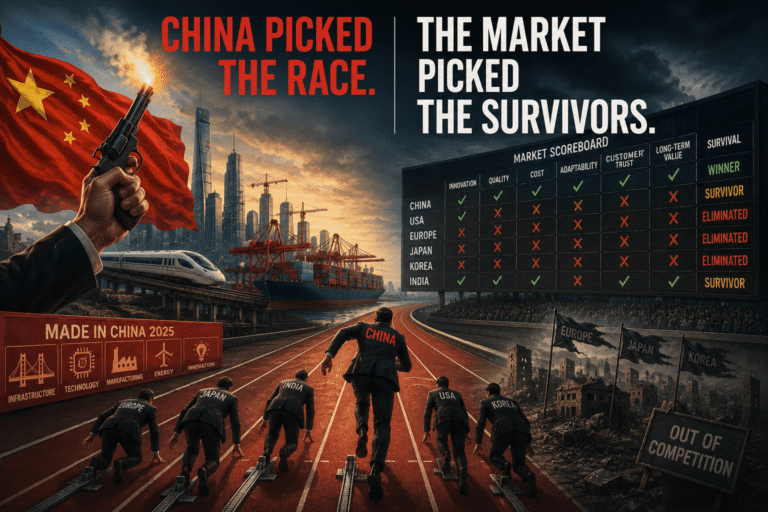
Made in China 2025. Dual Circulation.
The language of civilizational timelines is spoken plainly, for attribution, in official documents.
That is a genuine shift.
A country that spent three decades letting its infrastructure do the speaking has chosen to start speaking.
What it says now is not a secret.
It is written in the documents.
The question is whether it is being read with the same seriousness it was written with — and that question belongs to people making decisions in rooms this article cannot reach.
The hum in the background has changed frequency.
That much is audible.
What it is building toward is visible in plain language, for anyone reading carefully enough.