Letter from Her: How Women Learn to Silence Their Own Judgment
Social Expectations, Marriage, and the Quiet Cost of Adaptation
Women often learn silence before they learn trust in their own judgment.
Not literal silence.
The ability to speak remains.
What gradually erodes is permission to rely on personal assessment when it conflicts with social expectation, institutional authority, or male approval.
The erosion rarely arrives dramatically.
It accumulates through repeated moments where:
- Agreement receives approval
- Assertion creates friction
- Doubt becomes socially rewarded
- Confidence becomes socially expensive
Over time, maintaining independent judgment begins to feel costlier than suppressing it.
This pattern appears across:
- Professional hierarchies
- Family structures
- Medical systems
- Romantic relationships
But marriage often becomes the clearest environment where the process intensifies because intimacy and dependency operate continuously rather than occasionally.
This examination explores:
- How judgment suppression develops without overt coercion
- The social mechanisms that reward compliance
- Why silence hardens into identity over time
- The specific relationship dynamics that accelerate erosion
- What remains after years of systematic self-editing
The pattern is structural rather than purely personal.
Understanding it requires examining systems, incentives, and social conditioning instead of reducing everything to individual blame.
How Judgment Silencing Begins
Women rarely stop trusting themselves suddenly.
The process starts with small adjustments that appear practical and harmless.
A woman raises concern about:
- A financial decision
- A professional issue
- A medical judgment
- A relationship dynamic
The response is often not direct dismissal.
Instead, the concern gets reframed:
“You’re overreacting.”
“You’re being too emotional.”
“You don’t have the full picture.”
These responses matter because they reposition the issue.
The problem is no longer the concern itself.
The problem becomes her interpretation.
She adapts.
The next concern gets softened:
“I might be wrong, but…”
That phrasing reduces friction.
People respond more positively when judgment arrives disguised as uncertainty.
The adaptation works socially.
Which is exactly why it becomes dangerous psychologically.
Eventually the hedging stops being strategic and becomes internal.
She no longer performs uncertainty.
She experiences it.
The Expertise Discount
Women’s judgment often receives discounting even in areas where they possess direct expertise.
Examples repeat across professions and institutions:
- A female doctor has symptoms explained back to her
- A female engineer’s concern is ignored until repeated by a male colleague
- A mother’s assessment of her child gets overridden by professionals who observed the situation briefly
The pattern communicates something corrosive:
Expertise does not guarantee authority when gender hierarchy remains stronger than demonstrated competence.
This creates a deeper injury than ordinary disagreement.
Expertise should theoretically protect judgment from casual dismissal.
When it does not, women begin questioning whether any amount of competence grants legitimate authority.
Many eventually stop asserting expertise entirely.
Not because knowledge disappeared.
Because voicing it no longer feels worthwhile.
How Social Reward Systems Reinforce Silence
Women receive consistent approval for traits that require judgment suppression:
- Being agreeable
- Being accommodating
- Being flexible
- Being easy-going
These descriptions sound positive.
But socially, they often translate into:
- Do not insist on your assessment
- Reduce conflict quickly
- Prioritise group comfort over personal conviction
Women who resist this framing often receive labels instead:
- Difficult
- Abrasive
- Rigid
- Emotional
The labels carry real consequences:
- Social isolation
- Reduced cooperation
- Professional penalties
- Relationship strain
No central authority explicitly demands silence.
The enforcement operates through distributed social feedback.
That is why the pattern persists even in environments that consider themselves progressive.
The Mechanisms of Systematic Silencing
Emotional Reframing
When women express judgment strongly, responses often shift attention away from content and toward emotional tone.
Instead of addressing the point:
“Why are you so upset?”
“You’re getting emotional.”
The shift matters because it transforms the interaction.
Her emotional expression becomes the issue rather than the validity of her assessment.
Women adapt by flattening presentation:
- Careful phrasing
- Reduced emotional intensity
- Constant self-monitoring
The performance is exhausting.
And eventually the internal damage emerges:
If emotional intensity invalidates judgment, can strong feelings ever be trusted?
The Explanation Burden
Men often speak from assumed authority.
Women frequently speak from credential verification.
A woman with expertise offers analysis.
The response becomes:
“How do you know that?”
“What makes you qualified?”
The burden differs fundamentally.
Men contribute perspectives.
Women repeatedly prove permission to contribute at all.
Over time, many women stop offering judgment unless:
- They can over-explain credentials
- They can provide exhaustive evidence
- They are directly invited
Silence then gets interpreted as lack of perspective instead of withdrawal from hostile evaluation.
Reputational Asymmetry
Men often survive incorrect judgments with minimal reputational damage.
Women frequently experience generalised credibility erosion after equivalent mistakes.
A man being wrong becomes:
“He misjudged this situation.”
A woman being wrong becomes:
“She doesn’t know what she’s talking about.”
This asymmetry changes incentives.
Asserting judgment becomes riskier because mistakes carry broader identity consequences.
The rational adaptation becomes silence.
Marriage as a Concentrated Environment for Judgment Erosion
Marriage intensifies these dynamics because emotional intimacy and daily decision-making combine continuously.
The Hierarchy of Decision Domains
Many marriages develop implicit authority divisions.
Certain domains often default toward male judgment:
- Finances
- Career decisions
- Large purchases
- Relocation choices
Other domains often default toward female responsibility:
- Childcare logistics
- Household management
- Social coordination
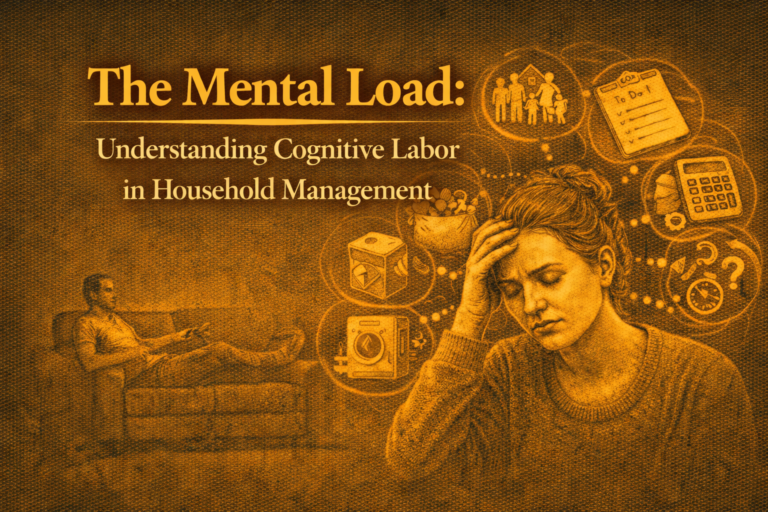
- Emotional labour
The arrangement initially appears balanced.
But the domains are not structurally equal.
Financial and career decisions define long-term boundaries inside which household decisions must operate.
This quietly positions his judgment as setting the framework while hers functions within it.
The Harmony Imperative
Women often absorb disproportionate responsibility for preserving relational peace.
When disagreement appears, subtle pressure emerges:
“Is this really worth arguing about?”
“Can’t you just let it go?”
The implication is clear:
Her judgment becomes negotiable when harmony feels threatened.
Male insistence often gets interpreted as conviction.
Female insistence often gets interpreted as disruption.
Over years, women begin internally evaluating whether any concern is “worth” conflict before voicing it.
That calculation itself becomes a form of surrender.
Gaslighting Through Reinterpretation
Some relationships develop recurring reinterpretation patterns:
- “You never said that.”
- “That’s not what happened.”
- “You’re remembering it wrong.”
This may be deliberate manipulation.
Sometimes it is simply asymmetrical interpretation repeated consistently in one direction.
The effect remains damaging regardless.
Repeated correction of memory destabilises trust in perception itself.
If memory becomes unreliable, judgment soon follows.
Economic Dependency and Power
Economic imbalance amplifies judgment imbalance.
When one partner controls greater financial resources:
- Their decisions carry greater practical authority
- Their preferences become harder to resist
- The cost of disagreement rises
Women often stop voicing concerns about decisions they know they cannot ultimately influence.
The silence preserves stability while reinforcing the hierarchy that created the silence.
When Silence Becomes Identity
The Disappearance of Preference
After years of adaptation, many women lose immediate access to personal preference itself.
Questions such as:
- “Where do you want to go?”
- “What do you want?”
- “What would make you happy?”
Produce genuine uncertainty.
This is not politeness.
The internal mechanism connecting desire to expression weakens through disuse.
Others may interpret this as being naturally accommodating.
In reality, it often reflects erosion of internal clarity.
The Consultation Reflex
Many women develop dependency on external validation for even minor decisions.
This appears as:
- Polling others before choosing
- Seeking repeated reassurance
- Checking whether preferences are “reasonable”
The pattern signals reduced trust in personal assessment.
External input no longer supplements judgment.
It replaces it.
Physical Manifestations
Sustained judgment suppression often produces physical symptoms:
- Chronic fatigue
- Digestive problems
- Anxiety
- Muscle tension
- Persistent emotional exhaustion
The body often registers conflict long before conscious recognition occurs.
Suppressed anger, fear, and invalidation frequently appear physiologically when expression becomes socially unsafe.
Relationship Patterns That Accelerate Erosion
The Competence-Undermining Cycle
Some husbands repeatedly magnify women’s mistakes while minimising equivalent male mistakes.
Her forgotten bill becomes proof of irresponsibility.
His forgotten bill becomes understandable stress.
Over time:
- Her confidence declines
- Hypervigilance increases
- Anxiety produces more mistakes
The cycle reinforces itself.
Intellectual Appropriation
Women often perform research and analysis that later gets reframed as shared or male-generated insight.
Examples:
- “We discovered…”
- “I’ve been thinking…”
- “My understanding is…”
The practical issue is not just credit theft.
The deeper issue is erasure of authorship over judgment itself.
The Moving Standard
Some relationships create impossible standards:
- Confidence becomes arrogance
- Uncertainty becomes weakness
- Research becomes overthinking
- Speed becomes impulsiveness
No form of judgment presentation becomes acceptable.
Eventually silence feels safer than constant invalidation.
The Relationship Threat Dynamic
Sometimes judgment itself becomes framed as threatening the relationship:
“If you keep pushing this, I don’t know if this relationship will survive.”
The message is clear:
- Her assessment is optional
- The relationship is essential
This weaponises emotional investment against independent judgment.
What Remains After Years of Suppression
The Empty Centre
Many women can clearly describe:
- What others expect
- What seems reasonable
- What avoids conflict
But struggle to identify:
What they genuinely think independent of external framing.
This absence creates vulnerability because external guidance replaces internal orientation.
Delayed Rage and Grief
Sometimes recognition arrives years later.
The resulting emotions are often overwhelming:
- Grief for lost identity
- Rage at manipulation
- Anger at personal compliance
- Sorrow over wasted years
The intensity reflects cumulative damage rather than isolated incidents.
Rebuilding Judgment
Recovery requires rebuilding trust in perception itself.
The process often begins with small acts:
- Making decisions independently
- Expressing disagreement without apology
- Acting without seeking validation
The reconstruction is slow because the suppression was slow.
Many women discover they cannot rebuild fully within relationships structured around continued invalidation.
Common Misunderstandings About Judgment Suppression
“Women Are Naturally Less Confident”
Confidence differences emerge socially rather than biologically.
Research consistently shows young girls initially displaying confidence levels similar to boys before prolonged social conditioning changes behavioural patterns.
“This Only Happens in Traditional Relationships”
The dynamics persist across ideological environments.
Even progressive relationships may unconsciously reproduce subtle authority hierarchies through social conditioning rather than explicit belief.
“Women Who Stay Are Weak”
This ignores:
- Economic dependency
- Children
- Social pressure
- Emotional investment
- Judgment erosion itself
The ability to leave weakens when trust in one’s own assessment has already been systematically undermined.
“Therapy Always Solves This”
Therapy helps only when both people genuinely want structural change.
If one partner benefits from the existing hierarchy, therapy can become another mechanism for reframing legitimate concerns as interpersonal dysfunction instead of power imbalance.
What Changes When Silence Is Recognised
Internal Permission Returns
Recognition changes the question from:
“Am I allowed to think this?”
To:
“I think this regardless of permission.”
That shift matters psychologically even before external circumstances change.
Anger Becomes Informational
The anger many women feel after recognising suppression is not irrational instability.
It is information.
It identifies:
- Boundary violations
- Repeated invalidation
- Lost autonomy
- Suppressed authenticity
Treating anger purely as something to suppress repeats the original pattern.
Relationships Reorganise
Some relationships adapt to restored judgment.
Others collapse because they depended on asymmetry to function.
The distinction becomes visible once accommodation stops operating automatically.
Decision-Making Becomes Mutual
Healthy reconstruction creates bilateral decision structures:
- Both perspectives matter equally
- Disagreement becomes survivable
- Conflict no longer signals relationship failure
- Authority no longer defaults automatically
The process is less smooth than silent hierarchy.
But it is more honest.
Further Reading
- Too Good to Leave, Too Bad to Stay by Mira Kirshenbaum
- Why Does He Do That? by Lundy Bancroft
- The Gaslight Effect by Robin Stern
- Down Girl by Kate Manne
- Invisible Women by Caroline Criado Perez
Final Perspective
Judgment silencing rarely appears through dramatic domination alone.
It develops through accumulated moments where:
- Assertion creates friction
- Accommodation creates reward
- Doubt becomes socially reinforced
Marriage often intensifies this process because intimacy, dependency, and daily negotiation continuously interact.
The damage eventually extends beyond relationships.
It alters how women relate to their own perception, memory, and internal certainty.
Over years, many stop trusting not only what they say, but what they think.
Recognition does not instantly repair the erosion.
But it changes the process from unconscious adaptation into conscious evaluation.
That distinction matters because silence maintained unconsciously feels inevitable.
Silence recognised structurally becomes negotiable.
And once judgment becomes visible again, the possibility of rebuilding it returns with it.