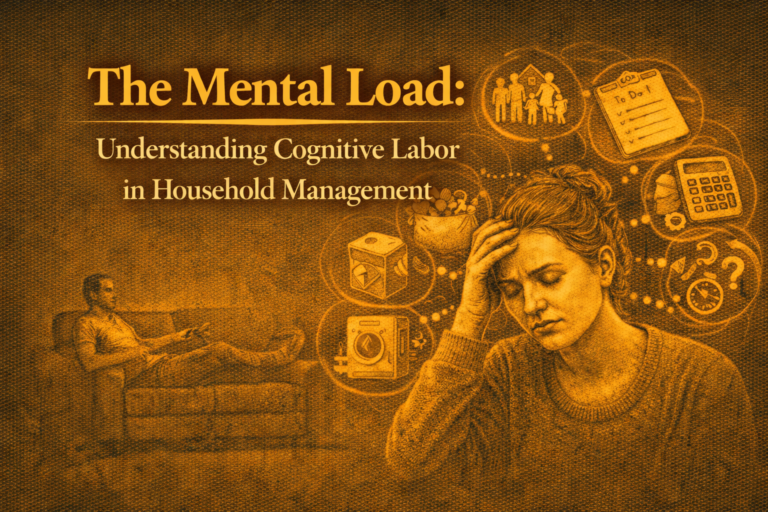
THE FLEXIBILITY TRAP :Why Workplace Accommodation Becomes Career Penalty
How Negotiating Reduced Hours Affects Promotion Velocity and Lifetime Earnings
When Meera, a senior product manager at a mid-size tech firm, negotiated a four-day workweek after her second child, her manager called it a win for everyone.
Eighteen months later, she had been passed over for promotion twice, removed from a high-visibility cross-functional team, and quietly reclassified as a “flex-track” employee in the HR system she was never supposed to see.
Nothing about her performance had changed.
Everything about her trajectory had.
This is the flexibility trap: the gap between the accommodations companies promise and the professional penalties workers quietly absorb.
Reduced hours, compressed schedules, and remote-first arrangements are increasingly framed as progressive benefits.
But beneath that framing lies a structural reality that research, earnings data, and lived experience repeatedly confirm:
Workers who use flexibility policies, disproportionately women, caregivers, and employees with disabilities, often pay for that flexibility in the currency of career velocity.
The flexibility trap is not fundamentally about individual choices.
It is about how organizations assign value and who absorbs the cost when that value is recalculated.
How the Flexibility Penalty Actually Works
Presence as a Proxy for Commitment
The first mechanism is simple and deeply embedded:
Physical or temporal presence becomes a stand-in for dedication.
Management research has long shown this is an unreliable proxy for performance, yet organizations continue using it because presence is visible and easy to measure.
Employees who arrive early, stay late, respond instantly, and attend optional meetings accumulate what researchers often describe as informal “face-time capital.”
This capital is rarely written into official performance criteria.
Yet it strongly shapes:
- promotion decisions
- leadership perceptions
- assignment allocation
- executive visibility
Research from Harvard Business School found that employees working traditional or extended schedules were rated as more committed and more leadership-ready than employees with identical output on compressed schedules.
The bias remained even when evaluators were instructed to judge only outcomes.
For reduced-hours employees, this creates a structural disadvantage.
They miss:
- informal strategy discussions
- late-day decision meetings
- network-building interactions
- spontaneous executive exposure
These moments are rarely documented.
But they shape organizational memory and influence.
The Assignment Spiral
Reduced-hours employees are also filtered out of high-stakes projects at disproportionately high rates.
Usually this happens quietly rather than explicitly.
Managers gravitate toward employees perceived as continuously available when projects involve:
- unpredictable deadlines
- travel
- weekend availability
- cross-time-zone coordination
The justification is often framed as consideration:
“We didn’t want to overload you.”
The result is what can be called the assignment spiral.
Flex-track employees receive:
- fewer stretch assignments
- fewer visible leadership opportunities
- less strategic ownership
That produces thinner achievement portfolios.
Those thinner portfolios later appear during promotion reviews as evidence of lower readiness.
What began as an opportunity gap gradually gets reinterpreted as a performance gap.
Each missed promotion cycle compounds:
- salary differences
- bonus differences
- equity gaps
- organizational influence deficits
The Stigma Effect
Flexibility arrangements also trigger assumptions about ambition.
Employees using caregiver leave, compressed schedules, or reduced-hours policies are frequently perceived as less advancement-oriented, regardless of their actual goals.
Organizations that equate ambition with constant availability often interpret flexibility use as a signal of reduced commitment.
Sociologist Arlie Hochschild identified this dynamic decades ago, and subsequent organizational behavior research has repeatedly confirmed it.
The stigma affects:
- promotion recommendations
- leadership evaluations
- informal sponsorship
- executive trust
Women absorb the greatest aggregate career penalty because they use flexibility accommodations at higher rates due to unequal caregiving burdens.
Quantifying the Financial Impact
The Cost of Slower Promotion Velocity
Promotion velocity, the rate at which employees advance through compensation bands, is one of the largest drivers of lifetime earnings differences.
Even modest delays compound dramatically over decades.
Consider two employees beginning at:
$70,000 annually
- Employee A reaches a senior role in year four at $95,000.
- Employee B reaches the same role in year seven after spending time on a reduced-hours arrangement.
Assume:
- 4% annual raises
- 10% annual bonus structures
- otherwise equivalent performance
The three-year delay compounds through every subsequent:
- raise
- bonus cycle
- equity grant
- retirement contribution
Across a full career, the earnings difference often exceeds:
$400,000 before equity compensation
Once equity and retirement compounding are included, the gap can exceed:
$700,000
This is not a minor inconvenience.
It is a structural transfer of long-term wealth.
The Equity Compensation Gap
Senior-level wealth accumulation increasingly depends on equity rather than salary alone.
Stock grants, options, and profit-sharing are tied to:
- pay band
- seniority
- promotion timing
Employees who reach leadership levels later receive:
- smaller grants
- shorter compounding windows
- less vesting upside
In high-growth sectors such as technology and finance, the difference between receiving equity in year four versus year six can represent hundreds of thousands of dollars in realized wealth.
Retirement and Benefits Compounding
Reduced compensation also affects:
- 401(k) matches
- pension accruals
- insurance tiers
- retirement balances
Over a 30-year career, these differences compound substantially.
The cumulative wealth gap between flex-track and standard-track employees with equivalent skills can eventually reach seven figures.
The employees absorbing these penalties are often the workers already carrying greater financial and caregiving pressure.
Who Pays the Highest Price
Gender and the Flexibility Penalty
Women use flexibility arrangements at higher rates across nearly every industry studied.
The reason is structural:
Caregiving labor remains unevenly distributed inside households.
This means the career costs attached to flexibility policies land disproportionately on women.
A significant portion of the persistent gender wage gap reflects not simply occupational sorting, but the accumulated penalties attached to flexibility usage itself.
In this sense, the flexibility trap functions as one of the central engines of gendered earnings inequality in professional labor markets.
Disability and Chronic Illness
Employees managing disability or chronic illness face an intensified version of the same dynamic.
Accommodations such as:
- reduced travel
- modified schedules
- remote work
may be legally protected while remaining culturally penalized.
Many workers conceal accommodation needs for as long as possible because they observe the professional consequences experienced by colleagues who disclosed earlier.
The cost becomes both economic and psychological.
Lower-Income Workers
Lower-income professionals often experience the flexibility trap more severely because they possess fewer buffers:
- less accumulated wealth
- smaller professional networks
- less bargaining power
A senior executive can sometimes preserve influence despite reduced hours through external networks and reputation capital.
A mid-level employee usually cannot.
Their trajectory depends heavily on internal visibility and formal advancement.
Structural Solutions That Reduce the Flexibility Penalty
Outcome-Based Evaluation Systems
Organizations that successfully reduce flexibility penalties shift away from presence-based evaluation toward documented outcomes.
Performance becomes tied to:
- results delivered
- projects completed
- revenue generated
- quality metrics
rather than to perceived dedication through hours visible.
This approach requires more disciplined management systems but produces more accurate evaluations for all employees.
Flexibility Without Classification
Some organizations reduce stigma by removing formal “flex-track” classifications entirely.
Instead, flexibility becomes normalized across teams rather than framed as an exception.
The penalty for flexibility is strongest when flexibility signals deviation from the standard employee model.
When variable schedules become normal rather than exceptional, the signal weakens.
Sponsorship and Assignment Monitoring
Tracking who receives high-visibility assignments can reveal hidden inequality patterns.
If flex-track employees consistently receive lower-impact work, organizations can intervene directly.
Senior sponsorship programs can also partially offset visibility deficits by ensuring employees remain connected to influential networks and opportunities.
Pay Transparency and Equity Audits
Regular compensation audits help organizations identify promotion and earnings gaps before they become entrenched.
Transparency matters because invisible penalties rarely generate accountability.
The objective is not symbolic flexibility.
It is structural redesign.
Individual Strategies for Navigating the Flexibility Trap
Workers navigating reduced-hours arrangements can reduce some of the professional cost through deliberate visibility and documentation strategies.
Document Outcomes Aggressively
Maintain detailed records of:
- projects completed
- metrics improved
- revenue influenced
- leadership responsibilities handled
Concrete evidence becomes critical during promotion discussions.
Build Structured Visibility
Reduced-hours employees often benefit from intentional visibility strategies:
- presenting in meetings
- maintaining executive contact
- leading discussions
- volunteering for selective high-impact work
These actions partially compensate for reduced face-time exposure.
Formalize Agreements
Informal flexibility arrangements are easier to reverse and harder to defend.
Written agreements should specify:
- schedule expectations
- promotion eligibility
- benefits continuation
- review timelines
Clarity creates accountability.
Conclusion: The Hidden Price of “Flexibility”
The flexibility trap is fundamentally a structural design problem.
Organizations continue to reward:
- visibility
- availability
- constant responsiveness
even while publicly endorsing flexibility.
The contradiction compounds through thousands of small decisions:
- who receives assignments
- who enters leadership pipelines
- who gets remembered during promotion discussions
- whose ambition gets assumed
Until organizations redesign the systems beneath flexibility policies, the workers who need accommodations most will continue paying the highest price for using them.
The gap between the policy on the website and the penalty in the paycheck is not accidental.
It is structural.
And structural problems require structural solutions.
Meera eventually left her company after her third missed promotion cycle.
She joined a startup where performance was measured more concretely and schedule norms were less rigid.
It took her four years to recover the career trajectory she lost in eighteen months.
She considers herself fortunate.
Most workers in her position never fully recover the compounding loss.
This article draws on research in organizational behavior, labor economics, and gender studies, including work from Harvard Business School, the Institute for Women’s Policy Research, and Claudia Goldin’s scholarship on labor market inequality.
About the Author
Mrs Chandravanshi (Deepa Chandravanshi) writes about how marriage, motherhood, workplace systems, and social expectations shape women’s timing, choices, and autonomy. Her work focuses on the quiet structural pressures through which self-reduction gradually becomes normalized.