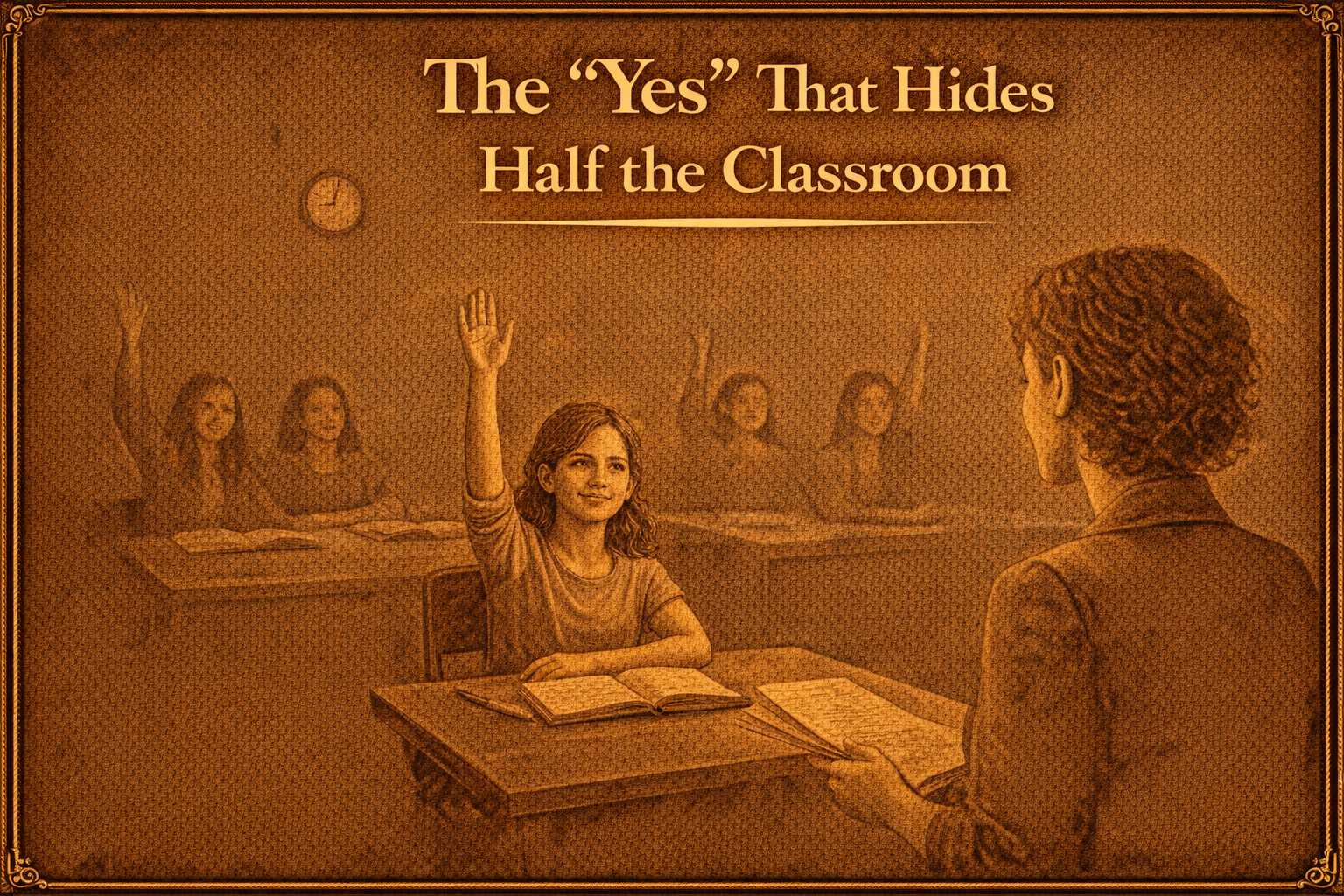
The “Yes” That Hides Half the Classroom
Why Students Say They Understand Even When They Don’t
The problem isn’t confidence. It’s the cost of becoming visible.
Introduction
You’ve seen this moment before.
The teacher turns from the board and asks:
“Clear?”
The class nods together.
The teacher continues.
And somewhere inside that room:
someone understood completely,
someone partially,
someone not at all.
But all three gave the same answer.
That is the real puzzle.
Why would a student say:
“Yes, I understood.”
when internally the answer is:
“I’m completely lost.”
The common explanation comes quickly:
- students are shy
- they lack confidence
- they are afraid to ask questions
That explanation sounds reasonable.
It is also incomplete.
Navya’s Nod
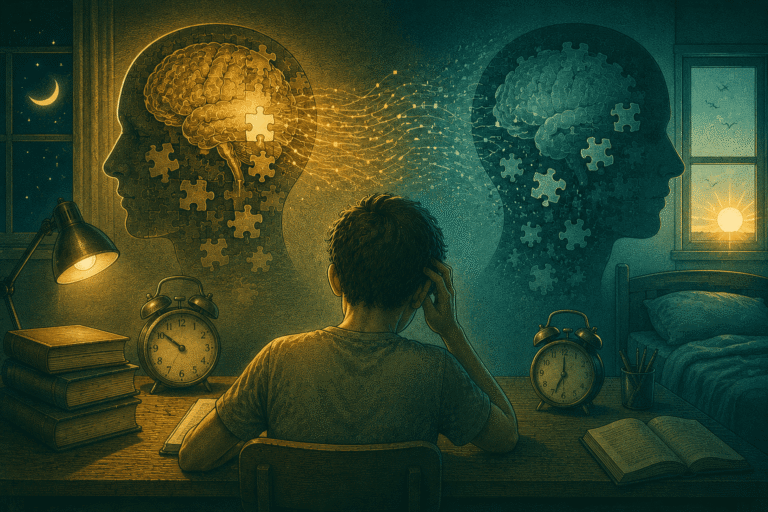
Navya is sitting in a Class 9 classroom.
Half-written notes in front of her.
A formula copied from the board.
A keyword circled twice because she did not understand it the first time either.
The teacher turns around.
“Clear?”
The girl next to her nods.
The boys in the back nod.
The room moves together.
Navya nods too.
And in that exact second:
she knows she understood almost nothing.
Still, she nods.
This is not laziness.
This is a calculation.
The Two Questions
The teacher asked:
“Did you understand?”
But inside the classroom’s social system, students hear a different question:
“Who is willing to publicly signal they are behind?”
These are not the same thing.
And they produce different answers.
Navya is not thinking about the chapter anymore.
She is thinking about what happens if she raises her hand:
- people turning to look
- the pause from the teacher
- the attention
- the feeling of becoming visible
Her confusion is private.
The hand raise makes it public.
And public confusion feels expensive in a room full of peers.
The Real Mechanism: Asymmetric Cost
This is the core idea most people miss.
Raising a hand creates an immediate cost.
The reaction happens within seconds:
- attention
- visibility
- social exposure
Staying silent creates a delayed cost.
That cost arrives later:
- during homework
- in the next chapter
- inside the exam hall
Human beings consistently choose against immediate discomfort, even when the delayed consequence is larger.
This is called asymmetric cost.
Immediate pain dominates delayed pain.
So Navya’s mind chooses:
Stay quiet now.
Deal with the consequences later.
Not because she is dishonest.
Because the system makes silence feel safer.
How The Loop Builds Quietly
Step 1
A student asks a question once and feels exposed.
Step 2
The brain remembers the social discomfort.
Step 3
Next time, silence feels safer.
Step 4
The misunderstanding remains hidden.
Step 5
The next chapter builds on a concept the student never fully understood.
One nod becomes many.
The gap grows invisibly.
Nothing in the system detects it.
The Measurement Problem
Most adults think the issue is confidence.
So they say:
“Students should ask more questions.”
But confidence is not the main variable here.
The real problem is that the checking method itself is flawed.
When a teacher asks:
“Everyone clear?”
the classroom produces only one visible signal:
the group answer.
But inside that answer are actually two separate realities:
- students who genuinely understood
- students who socially followed the group
The teacher sees one signal.
The room contains two truths.
This is not a student failure.
It is a measurement failure.
The system cannot detect the thing it is trying to measure.
What Actually Changes Behaviour
The solution is not:
“Be more confident.”
The solution is changing how understanding is checked.
For example:
- ask one student to explain the idea
- give a quick written response
- use pair-solving
- ask students to demonstrate the process
These methods change something important:
they remove the safety of hiding inside the group.
Now understanding becomes individually visible without requiring public self-exposure.
The student either knows or doesn’t.
And the teacher can finally see the difference.
Common Misreadings
“Students don’t ask because they don’t care.”
Interest and social risk are different things.
A student can care deeply and still stay silent.
“A kind teacher solves this.”
Teacher behaviour matters.
But even supportive classrooms contain visibility pressure.
The structure still exists.
“Only shy students do this.”
No.
Confident students run the same calculation too.
The threshold is simply different.
If You Remember Only This
Navya’s nod is rational inside the system she is operating in.
The immediate social cost of speaking feels larger than the delayed academic cost of silence.
So silence wins.
Again and again.
Until the gap becomes visible somewhere much later.
In 3 Lines
The nod is not random.
The student is responding to immediate social cost.
The real failure is that the system cannot detect hidden misunderstanding.
In 1 Line
The nod is not evidence of understanding.
It is evidence that silence feels safer than visibility.
Practice Questions
- What is asymmetric cost?
- Why is Navya’s nod rational?
- Why do group answers hide individual confusion?
- How can teachers check understanding more accurately?
- Give one example of immediate vs delayed cost outside a classroom.
FAQ
Q: Is this only an Indian classroom problem?
No.
Anywhere social visibility carries risk, similar behaviour appears.
Q: If students know asking questions is allowed, why stay silent?
Because “allowed” and “comfortable” are not the same thing.
The social cost still exists.
Q: Can confident students also fake understanding?
Yes.
Even confident students avoid unnecessary visibility when the immediate cost feels high.
Q: What should teachers do differently?
Stop relying only on group confirmation.
Use individual or small-group checks that reveal understanding more accurately.
Final Thought
Once you see the mechanism clearly, the classroom looks different.
The silence is not accidental.
The nod is not proof.
And the student is not the only one responsible for what happens next.
Because if the system rewards silence more safely than honesty,
then silence is exactly what the system will keep producing.