Gandhi vs. Ambedkar: Two Visions of Justice That India Still Hasn’t Reconciled
Why did two architects of modern India reach conclusions that cannot be reconciled
They both wanted a free India.
They disagreed, with precision and fury, about what freedom actually meant — and for whom.
When two serious thinkers disagree, the disagreement usually reveals something the agreement conceals.
Gandhi and Ambedkar agreed on the end of British colonial rule.
On nearly everything else — caste, religion, village life, economic structure, the meaning of justice — they held positions so opposed that reconciling them requires distorting at least one.
India has largely chosen distortion.
The official memory places both men on currency notes, in school curricula, on public statues, as complementary architects of the same nation.
The actual record shows two men who understood each other’s positions clearly, engaged each other directly, and reached incompatible conclusions.
This article examines what they each believed, where the arguments actually collided, who was closer to correct on the evidence available, and why India’s failure to genuinely reckon with the disagreement has costs that are still accumulating.
By the end, you’ll understand
-
What Gandhi and Ambedkar each believed about caste, justice, and Indian society
-
Where their positions directly contradicted each other — not just differed in tone
-
What the Poona Pact was, how it happened, and what it settled and didn’t
-
Whose framework better describes contemporary India’s social reality
-
Why the official reconciliation of these two men is historically inaccurate
The Two Men — Before the Conflict

Mohandas Karamchand Gandhi was born in 1869 in Porbandar, Gujarat, into a Vaishya family — the merchant and trading varna, third in the four-tier Hindu caste hierarchy.
He trained as a lawyer in London.
He spent twenty-one years in South Africa developing his philosophy of nonviolent resistance.
He returned to India in 1915 to lead the independence movement.
By the 1920s, he was the dominant figure in Indian national politics, capable of mobilising millions and commanding the moral authority of the Indian National Congress.
Bhimrao Ramji Ambedkar was born in 1891 in Maharashtra into a Mahar family classified as untouchable — outside the varna system entirely.
Untouchables were assigned the most degraded labour and subjected to ritual exclusion from public space, water sources, temples, and schools.
Ambedkar earned doctorates from Columbia University and the London School of Economics.
He qualified at the bar in London.
He led mass movements against caste discrimination and by the 1930s had become the most prominent political voice for untouchables in India.
The structural asymmetry between their starting points is an essential context for every argument that follows.
Gandhi experienced caste from within the system.
Ambedkar experienced it from beneath it.
This was not merely a biographical background.
It shaped, with logical consistency, every position each man held on the question.
What Each Man Actually Believed
Gandhi’s Framework: Reform from Within

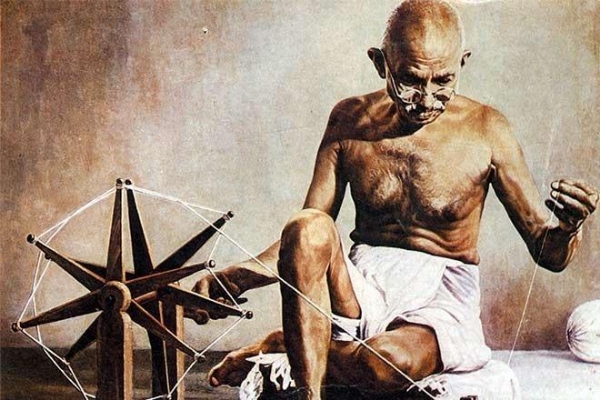
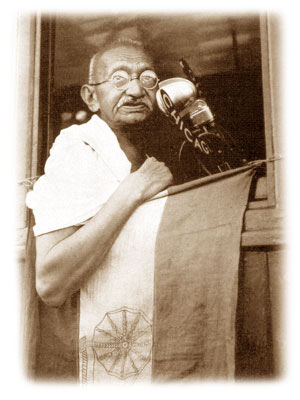
Gandhi’s position on caste evolved across his lifetime.
His defenders cite this evolution as evidence of intellectual honesty.
The trajectory, however, has a clear limit.
In his early writings, Gandhi expressed views on caste and varna that were explicitly conservative.
In Indian Opinion (1905) he wrote approvingly of the varna system as a framework for social organisation.
These early positions are frequently acknowledged and then set aside as youthful errors he later transcended.
What he never transcended was the belief that Hinduism contained within it the resources to address untouchability, and that the solution was reform from within the tradition rather than structural abolition.
His core positions were held consistently through the 1930s and 1940s:
Untouchability was a corruption of true Hinduism, not its product.
The texts and traditions of Hinduism, properly interpreted, did not sanction the degradation of untouchables.
Individual Hindus who practised untouchability were acting against the spirit of their religion.
Moral reform — changing hearts, persuading upper-caste Hindus to accept untouchables as equals — was both necessary and sufficient.
The varna system was different from the caste as practised.
Varna was functional differentiation by occupation, not hierarchical ranking by birth.
Properly understood, it was compatible with equality.
The problem was not varna but the hereditary rigidity and contempt that had corrupted it.
Village India was the foundation of a just society.
The self-sufficient village practising swadeshi — economic self-reliance — was the unit on which Indian civilisation rested.
Gandhi’s economic vision was anti-industrial.
He opposed large-scale factory production and envisioned India’s future in decentralised rural communities sustained by cottage industry, represented most iconically by the spinning wheel.
Independence meant moral and civilisational renewal.
Swaraj — self-rule — was as much about the inner life of Indians as about state sovereignty.
A free India that imitated British industrialism would have gained independence in form while losing it in substance.
Ambedkar’s Framework: Structural Abolition

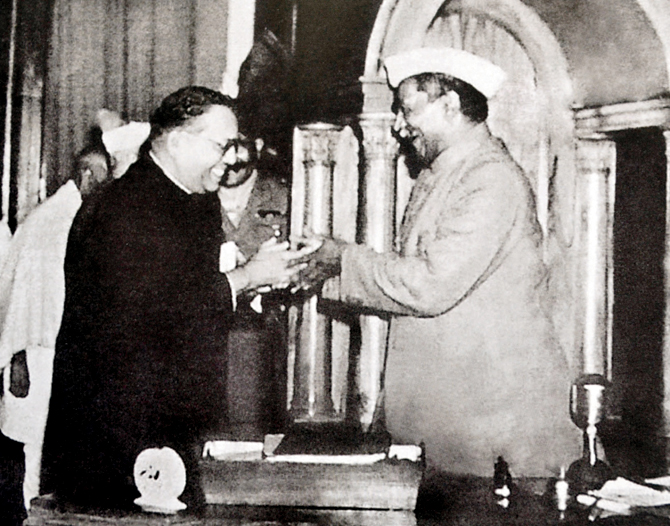

Ambedkar’s position was developed over forty years of writing, organising, and close study of Hindu texts.
It was not a reaction to Gandhi.
It was an independent analysis that arrived at conclusions incompatible with Gandhi’s framework.
His core positions, held consistently from the 1920s onward:
Caste was not a corruption of Hinduism. It was Hinduism’s operating system.
The graded hierarchy of the caste system was sanctioned by Hindu sacred texts — the Manusmriti, the Puranas, and the Dharmashastra literature.
As long as Hindus regarded these texts as authoritative, the social practices derived from them could not be fully abandoned.
Moral appeals to upper-caste Hindus to treat untouchables with respect asked them to change their behaviour while preserving the theological authority that justified it.
Ambedkar argued this was insufficient.
The varna-caste distinction Gandhi drew was historically unsustainable.
In practice, the two were indistinguishable.
Varna determined birth.
Birth determined occupation.
Occupation determined social position.
The four-tier model and the thousands of sub-castes operating within it were a single interlocking system.
Village India was not the foundation of justice.
It was the social unit within which caste oppression was most acute, most local, and most resistant to intervention.
Ambedkar called Gandhi’s village vision a celebration of the structure that had produced untouchability.
Industrialisation and urbanisation were emancipatory forces.
Factory work paid wages without asking for caste identity.
Cities allowed migration away from village hierarchies.
Ambedkar welcomed industrialisation because it broke the economic monopolies enforced by caste in agrarian settings.
Political equality without economic equality was meaningless.
Formal rights meant little to people who owned no land, had no savings, and depended economically on upper-caste landlords and employers.
Where the Arguments Directly Collided
Collision 1: The Source of Untouchability
Gandhi: Untouchability is a corruption of Hinduism that can be corrected through moral reform.
Ambedkar: Untouchability is produced by Hinduism’s theological structure and cannot be solved within it.
The empirical question is historical.
Ambedkar pointed to the repeated failure of internal reform movements.
The Bhakti saints — Kabir, Ravidas, Chokhamela — had preached equality for centuries.
The caste hierarchy persisted.
Ambedkar interpreted this persistence as evidence that reform within the tradition could not dismantle the structure.
Collision 2: Separate Electorates vs Joint Representation


At the Second Round Table Conference (1931) Ambedkar demanded separate electorates for untouchables.
This would allow untouchables to elect their own representatives independently of caste Hindu voters.
Gandhi opposed this.
He argued that separate electorates would permanently divide Hindu society.
The British government accepted Ambedkar’s proposal through the Communal Award (1932).
Gandhi responded by announcing a fast unto death in prison.
The political pressure was immense.
If Gandhi died during the fast, the independence movement would face a catastrophic crisis.
Ambedkar signed the Poona Pact (September 1932).
Separate electorates were surrendered.
Reserved seats within joint electorates were increased.
Ambedkar later described the event as coercion through moral authority.
Collision 3: The Village Question
For Gandhi, the village represented India’s moral centre.
For Ambedkar, the village represented the most complete enforcement system of caste hierarchy.
Village structures enforced:
-
segregated wells
-
segregated streets
-
segregated housing
-
occupational control
Upper-caste landlords controlled land, wages, and social access.
Economic exclusion was punishment for social defiance.
Ambedkar argued that the romanticisation of villages erased the perspective of those at the bottom of that hierarchy.
Collision 4: Hindu Sacred Texts
In Annihilation of Caste (1936) Ambedkar argued that caste could not be abolished without confronting the authority of Hindu scriptures.
He wrote:
“You must destroy the authority of the Shastras and Smritis,”
Gandhi responded in Harijan, arguing the texts had been misinterpreted and that true Hinduism supported equality.
Ambedkar rejected this approach.
His argument was methodological:
A tradition should be judged by its historical outcomes, not by idealised interpretations.
If caste hierarchy persisted for two thousand years, the tradition enabling it must be examined directly.
The Poona Pact: What It Settled — And What It Didn’t
The Poona Pact (1932) settled one question.
Separate electorates for untouchables were abandoned.
What it did not settle was whether Ambedkar’s structural argument was correct.
Subsequent political research suggests Ambedkar’s prediction held.
Reserved seats within joint electorates often produce candidates accountable to broader caste majorities rather than exclusively to Scheduled Caste voters.
Scholars such as Christophe Jaffrelot have documented this structural pattern in electoral data across decades.
Ambedkar later described the pact as a defeat, not a compromise.
Whose Framework Describes Contemporary India Better
This is not a question about intentions.
It is a question about predictive accuracy.
On caste persistence, Ambedkar predicted that legal equality without structural change would leave caste intact.
Contemporary data — including National Family Health Survey results, hiring audit studies, and residential segregation research — confirms caste still shapes marriage, employment networks, and neighbourhood patterns.
On village life, Ambedkar predicted rural caste hierarchies would remain durable.
Most documented caste atrocities still occur in rural settings, supporting that assessment.
On industrialisation, Ambedkar predicted urban migration would weaken caste occupational monopolies.
Urban labour markets show significantly weaker caste–occupation correlations than rural ones.
On the caste question specifically, Ambedkar’s analysis has proved more empirically accurate.
This does not diminish Gandhi’s achievements.
His strategy of nonviolent resistance mobilised millions and reshaped global political thought.
But on caste, the predictive record favours Ambedkar’s structural framework.
Why India Has Not Resolved the Disagreement
Official memory reconciles Gandhi and Ambedkar because the alternative is politically uncomfortable.
Endorsing Ambedkar fully means acknowledging that Gandhi’s analysis of caste was inadequate.
Endorsing Gandhi fully means accepting seventy-five years of slow moral reform with limited structural change.
Neither conclusion is easy.
So the disagreement is managed rather than resolved.
Both men appear on currency notes.
Both appear in textbooks.
The actual debate between them is rarely taught.
That avoidance carries policy costs.
Debates about reservations, land reform, and caste violence continue without confronting the structural diagnosis Ambedkar presented.
Common Misreadings of the Gandhi–Ambedkar Conflict
Misreading 1: They Were Ultimately on the Same Side
Why do people think this?
Both opposed colonialism and are honoured nationally.
Why it’s misleading:
Ambedkar repeatedly argued that the Congress movement did not represent untouchable interests.
In What Congress and Gandhi Have Done to the Untouchables (1945) he documented this position extensively.
They shared opposition to colonial rule.
Their visions of India’s future diverged sharply.
Misreading 2: Gandhi’s Fast Was Simply Nonviolent Protest
Why do people think this?
Gandhi used fasting throughout his career as a moral persuasion.
Why it’s misleading:
The 1932 fast was directed against a political mechanism granting untouchables independent representation.
Ambedkar described it as the instrumental use of moral authority for political leverage.
Misreading 3: Ambedkar’s Position Was Extreme
Why do people think this?
He argued for confronting religious authority and later converted to Buddhism.
Why it’s misleading:
Ambedkar’s conclusions followed from historical evidence.
If caste hierarchy is justified through sacred texts, dismantling it requires confronting those texts.
His position was radical in the sense of going to the root of the problem, not arbitrary.
Final Understanding
Gandhi and Ambedkar were not two leaders offering slightly different perspectives on the same problem.
They diagnosed the same problem and reached incompatible conclusions.
One believed caste could be corrected through moral reform within Hinduism.
The other believed caste required structural transformation and theological challenge.
India adopted Ambedkar’s constitutional framework.
But public discourse often continues to rely on Gandhi’s gradual moral reform model.
The tension between those two approaches still shapes every debate about caste policy.
The disagreement between Gandhi and Ambedkar is not a historical footnote.
It is the unresolved argument at the centre of what India is still deciding to become.